Genocide, war crimes, crimes against humanity — international criminal justice is the framework through which individuals are held accountable for such grave international crimes by means of law rather than force. How can the principle that accountability rests on law, not power, be sustained? Guided by its founding spirit of Independence and Self-Respect (Dokuritsu Jison), Keio University is building an academic hub in the Asia-Pacific region dedicated to this question.
The Asia-Pacific is a region of extraordinary diversity in legal systems, political systems, historical backgrounds and values. Precisely for this reason, it is essential to examine rigorously, and to share, the significance, limits, legitimacy and effectiveness of international criminal justice through sustained dialogue across borders and disciplines.
The Center aims to serve as a hub for research, education and dialogue that underpins the legitimacy and effectiveness of international criminal justice in the Asia-Pacific region. It promotes international academic exchange and contributes scholarly perspectives, in Japan and abroad, on the key issues facing international criminal justice.
To this end, the Center serves as the Office of the ICC Asia-Pacific Academic Network for International Criminal Justice (APN). It supports the annual forum of the ten ICC partner universities in Japan, the Republic of Korea and Mongolia that have concluded Memoranda of Understanding with the ICC. Drawing also on AI technologies, the Center fosters the development of students and early-career researchers and promotes exchange among experts and practitioners.
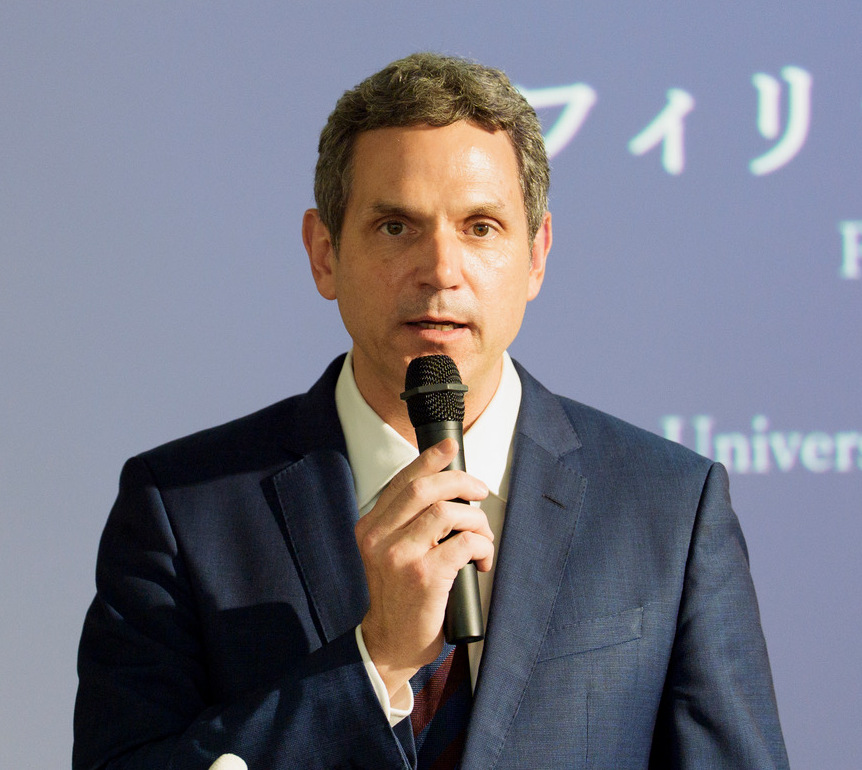
On the occasion of the establishment of the Keio University Center for International Criminal Justice, I would like to say a few words about how the Center came into being, its significance and its purpose.
International criminal justice has developed on the principle that individual criminal responsibility for the most serious crimes of concern to the international community as a whole — genocide, war crimes and crimes against humanity — should be pursued on the basis of law, rather than through armed force or the rule of power.
The Center was launched in 2026, which, as it happens, marks the 80th anniversary of the opening of the Tokyo Trial. Japan, which once sat in the dock of an international criminal tribunal that came into being amid many challenges, has since become the largest supporter of the International Criminal Court (ICC) and has even seen one of its nationals become President of the Court.
International criminal justice has, however, always faced a range of challenges. Given the difficult circumstances the ICC currently faces, there is a risk that the Court will be unable to exercise its functions fully without cooperation from many quarters. Moreover, although the Court seeks to realise universal legal norms, its presence in the Asia-Pacific region is not necessarily strong.
Against this background, the Center and the Asia-Pacific Academic Network were established to support the ICC from an academic perspective rather than from any particular political standpoint.
In 2024, ICC President Tomoko Akane delivered a lecture at Keio University, and the University and the Court concluded an agreement on the placement of interns, academic exchange and research cooperation. This built on many years of active exchange in research and education between judges of the Court and scholars at Keio.
Few universities in Japan offer courses in international criminal law even today. Keio introduced a course dedicated to the field more than twenty years ago and now offers a broad range of teaching and research in both Japanese and English. In 2025, the University hosted the first ICC Asia-Pacific Academic Forum, at which ten ICC partner universities from Japan, the Republic of Korea and Mongolia formed the present academic network. In March 2026, the Center co-hosted a lecture by former ICC Judge Bertram Schmitt with UNAFEI. These efforts have already been supported by many people.
Building on this history and these achievements, the Center will fulfil three roles:
Guided by Keio’s founding principle of Independence and Self-Respect, the Center stands on its own judgement, independent of any particular position or institution, and places great importance on academic neutrality and objectivity. Neutrality, in this sense, does not mean silence. Scholarship can contribute by continuing to examine rigorously, without siding with any particular position, not only the achievements of international criminal justice but also its challenges and limits, its legitimacy and its effectiveness.
Because the Asia-Pacific is a region of great diversity in legal and political systems and historical backgrounds, sustained academic dialogue across borders is indispensable. Through such activities, we will continue to strive to contribute to the sound development of international criminal justice.
Philipp Osten (Dr jur) is the Professor for Criminal Law and International Criminal Law at the Faculty of Law, Keio University, Tokyo. He received his legal education at Keio University, Tokyo and at Humboldt University, Berlin, where he attained his PhD. He has been teaching at Keio University since 2003. His main field of research is International Criminal Law, and he has published extensively (in Japanese, English and German) on issues related to the International Criminal Court (ICC), such as domestic implementation of the Rome Statute, modes of liability and other general principles of criminal law in the Rome Statute and the notion of core crimes. He has also published books on the history of international criminal trials, particularly on the Tokyo military tribunal. He was appointed Director of the Center for International Criminal Justice (CICJ) established at Keio University in 2026, serving as the secretariat of the ICC Asia-Pacific Academic Network for International Criminal Justice (APN).

Izumi Fujiwara specialises in public international law and international human rights law. She teaches as an adjunct lecturer at Keio University (Correspondence Course), Juntendo University (Faculty of International Liberal Arts) and Nihon University (College of Humanities and Sciences). She previously handled matters relating to the International Court of Justice and the International Criminal Court at the Embassy of Japan in the Netherlands. She has also gained practical experience in international law, human rights, diplomacy and public policy at Human Rights Watch, GR Japan and the Intelligence and Analysis Service of the Ministry of Foreign Affairs of Japan, among others. She holds an LL.M. from the Graduate School of Law, Keio University, where she subsequently completed the coursework of the doctoral programme in international law. As a Fulbright Scholar, she earned a Master of Arts in Law and Diplomacy (MALD) from The Fletcher School of Law and Diplomacy, Tufts University.